
Helping Australia see its climate future
How Redboat helped ACCESS-NRI explain climate modelling, make national research infrastructure visible, and connect complex science to the decisions that shape our future.
Client & context
Climate models inform decisions about the places we live, the infrastructure we build and the risks we prepare for. Yet the tools behind those decisions—and the people who develop them—can be difficult to explain to anyone outside the research community.
ACCESS-NRI, Australia’s climate simulator, engaged Redboat to help bridge that gap.
As a national research infrastructure funded through the National Collaborative Research Infrastructure Strategy (NCRIS), ACCESS-NRI supports the development and use of the Australian Community Climate and Earth System Simulator: ACCESS. This modelling framework connects representations of the atmosphere, ocean, land and sea ice to help researchers investigate how our planet behaves.
The brief was to create an animated explainer that would make this capability understandable and show why it matters. Its primary audience included funders, government representatives and decision-makers who needed to understand the value of Australia’s climate modelling infrastructure without first becoming specialists in climate science.
The challenge: explaining the science and the infrastructure behind it
The project needed to answer three connected questions: what are climate models, what can they help us understand, and why does Australia need the capability to develop and maintain them?
Each question brought a different communication challenge.
Climate models involve equations, computer code, interacting Earth systems and enormous computing resources. Explaining these elements individually would be demanding enough. Showing how they work together, within a concise animation, required a carefully structured narrative.
There was also an important distinction to make between ACCESS, the modelling framework, and ACCESS-NRI, the infrastructure and expertise supporting its development and use. For audiences accustomed to thinking of infrastructure as buildings or equipment, the value of research software and the specialists who maintain it needed to become visible.
Above all, the animation had to establish relevance. Funders and government representatives needed to see the connection between technical capability and practical decisions about communities, food production, energy, infrastructure and climate resilience.
Our approach: give the audience a reason to understand
We worked with ACCESS-NRI to develop a narrative that introduced the need for climate models before explaining their mechanics.
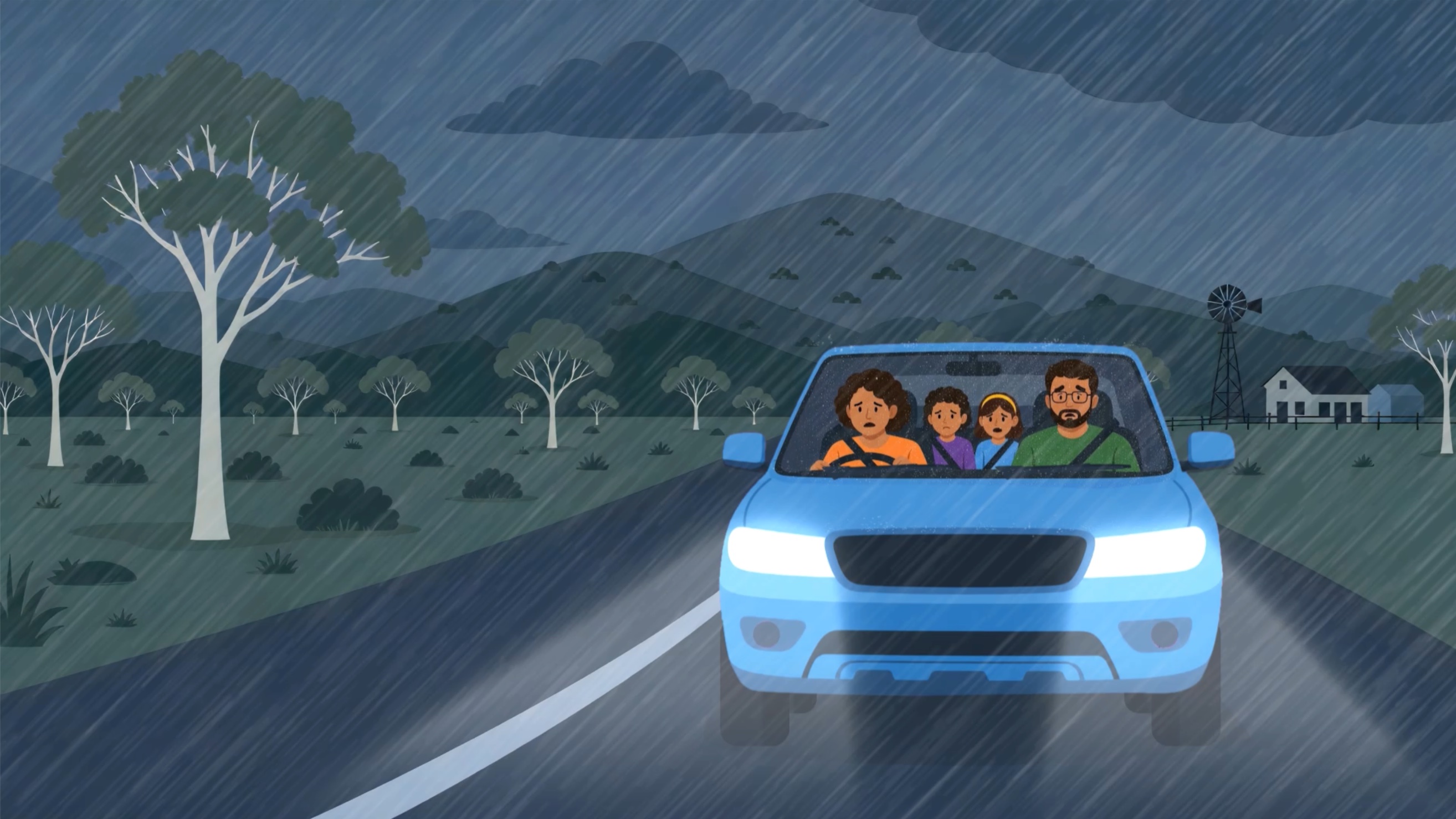
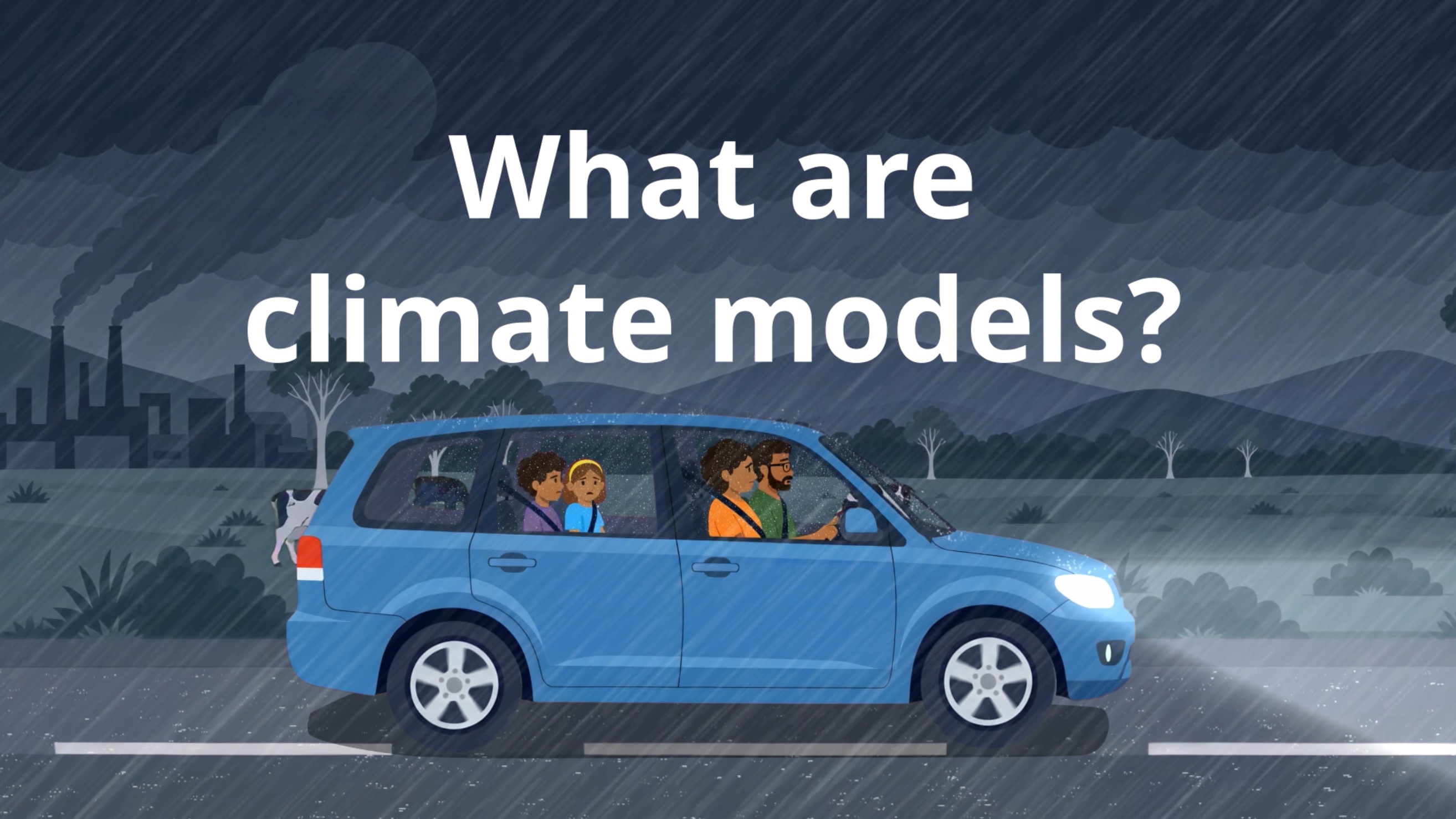
The story opens with a family driving through heavy rain, struggling to see the road ahead. It establishes a familiar problem: making decisions when visibility is limited.
That opening gives the science a human point of reference. Before encountering equations or computing systems, viewers understand why better information matters.
The narrative then moves through a deliberate sequence: how climate models work, what researchers can do with them, how their insights support decisions, and the role of ACCESS and ACCESS-NRI in making that work possible.
This structure gives each technical explanation a purpose. Viewers encounter the detail when they have enough context to understand why it belongs in the story.
Making the invisible visible
Animation allowed us to show processes that would be difficult to communicate through live-action footage alone.
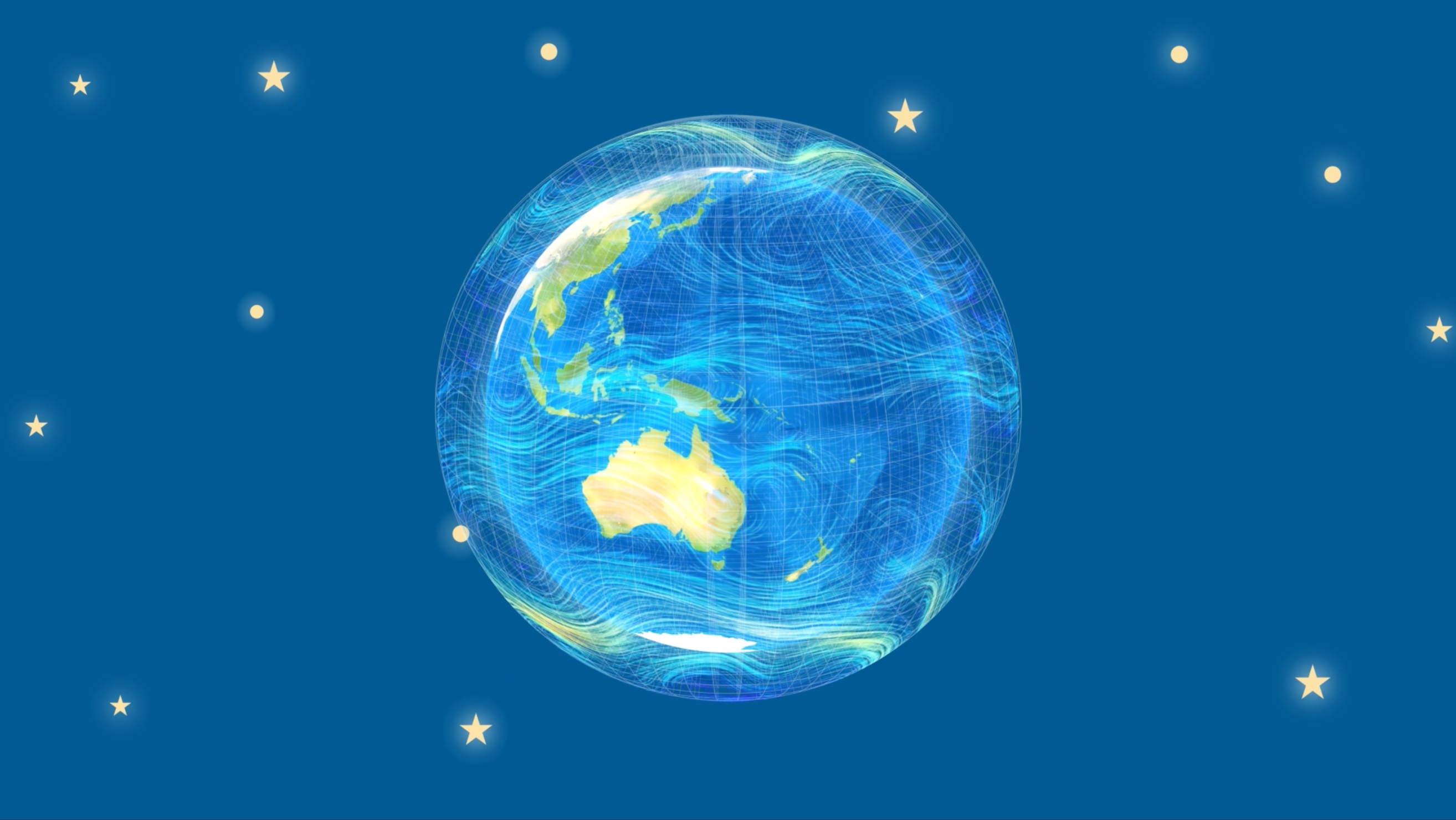
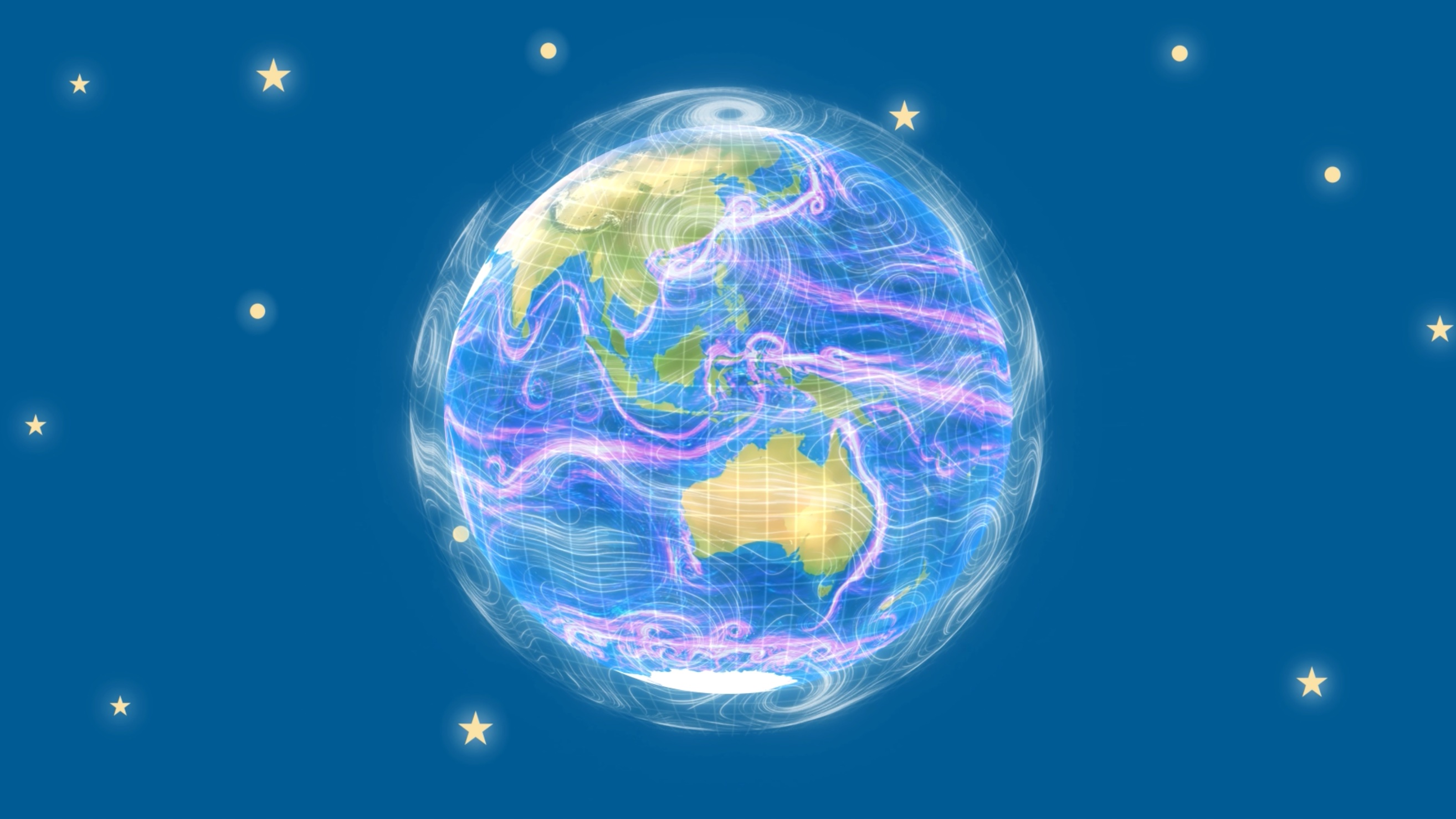
The visual explanation begins with a moving planet, introducing the atmosphere, oceans and energy flows as parts of a connected system. Equations then form the globe, before flowing into computer code. The sequence connects the physical world to its mathematical representation and, in turn, to the software used to simulate it.
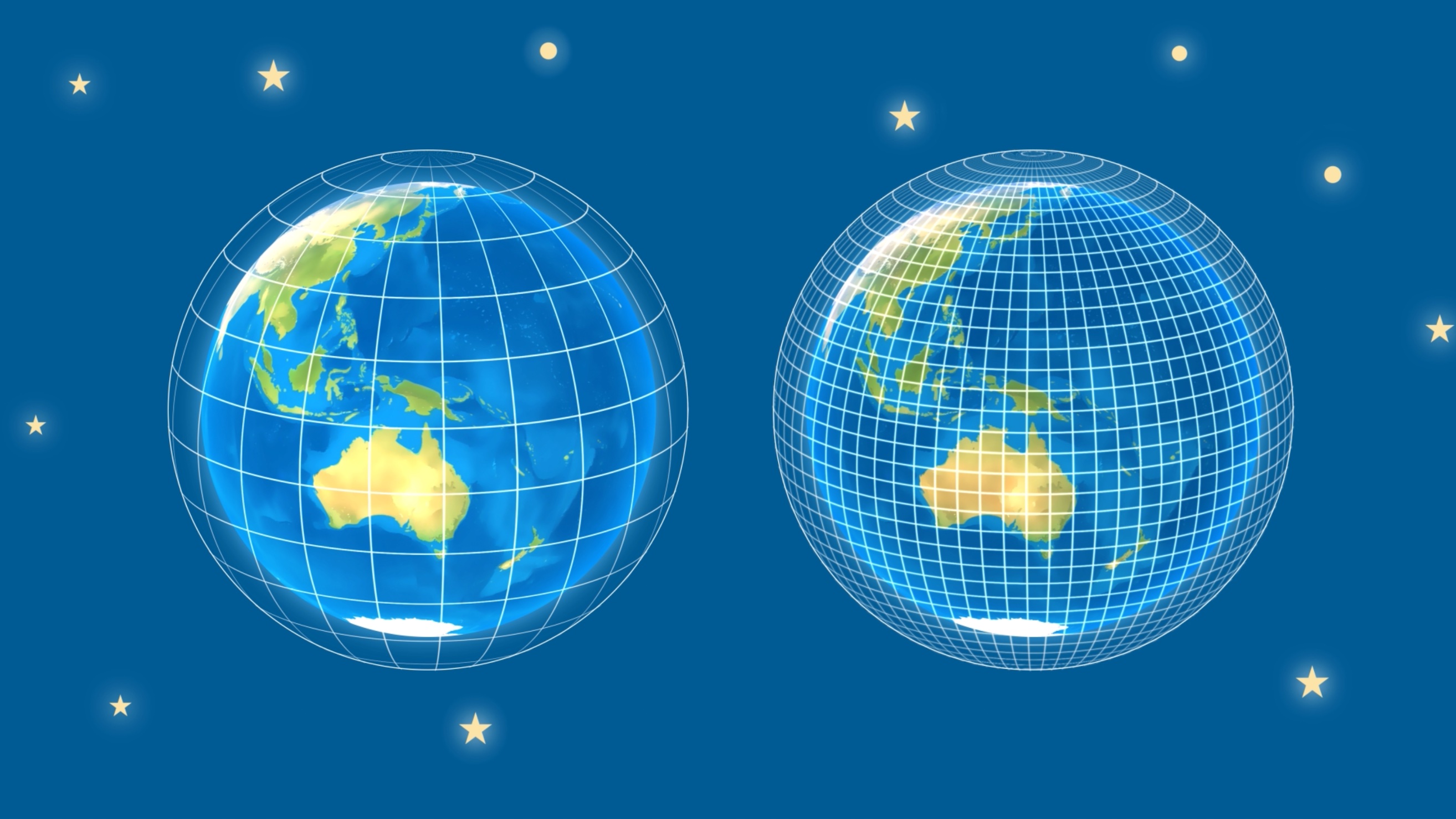
From there, the Earth becomes a three-dimensional grid. The comparison with pixels gives viewers a familiar way to understand how a model divides a continuous planet into smaller parts that a computer can calculate.
A comparison between coarser and finer grids makes the computing requirement tangible. More detailed representations bring more calculations and interactions, which require greater computing resources. Rather than asking viewers to accept that supercomputers are necessary, the animation gives them a visual reason to understand the need.
The aim throughout was to make the explanation accessible while preserving the relationships that give the science meaning.
Explaining possible futures
A central task was to show what researchers can learn from a climate model.
An archery sequence introduces the idea that physical laws can help us anticipate how a system will behave. The animation then expands that idea into a visual explanation of climate simulations.
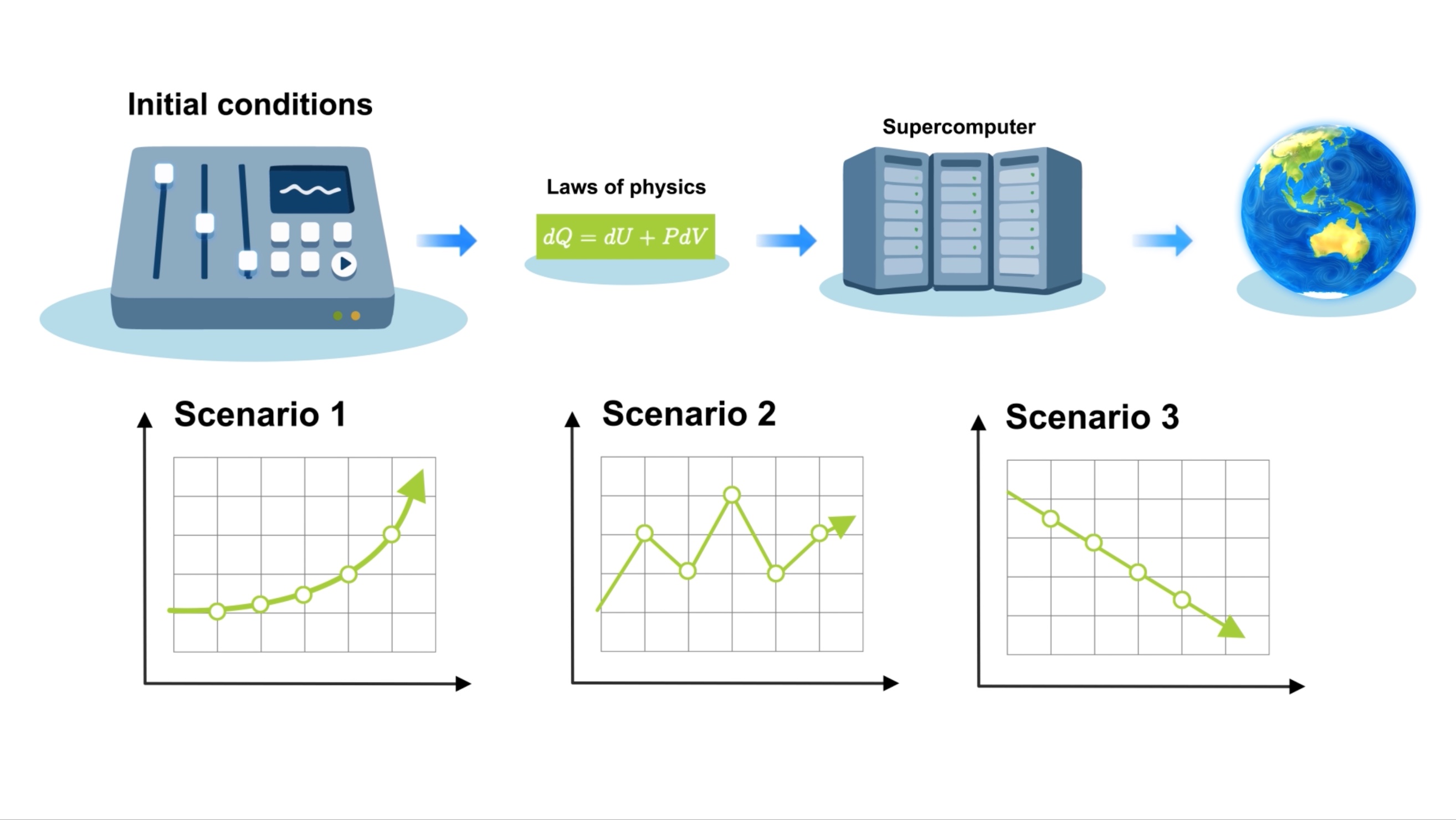
Inputs such as carbon dioxide levels, ocean temperatures and land conditions feed into a model. Changing those inputs produces different simulated outcomes, allowing researchers to investigate “what happens if” questions.
This helps viewers understand modelling as a way to explore possible futures and the implications of different conditions and choices.
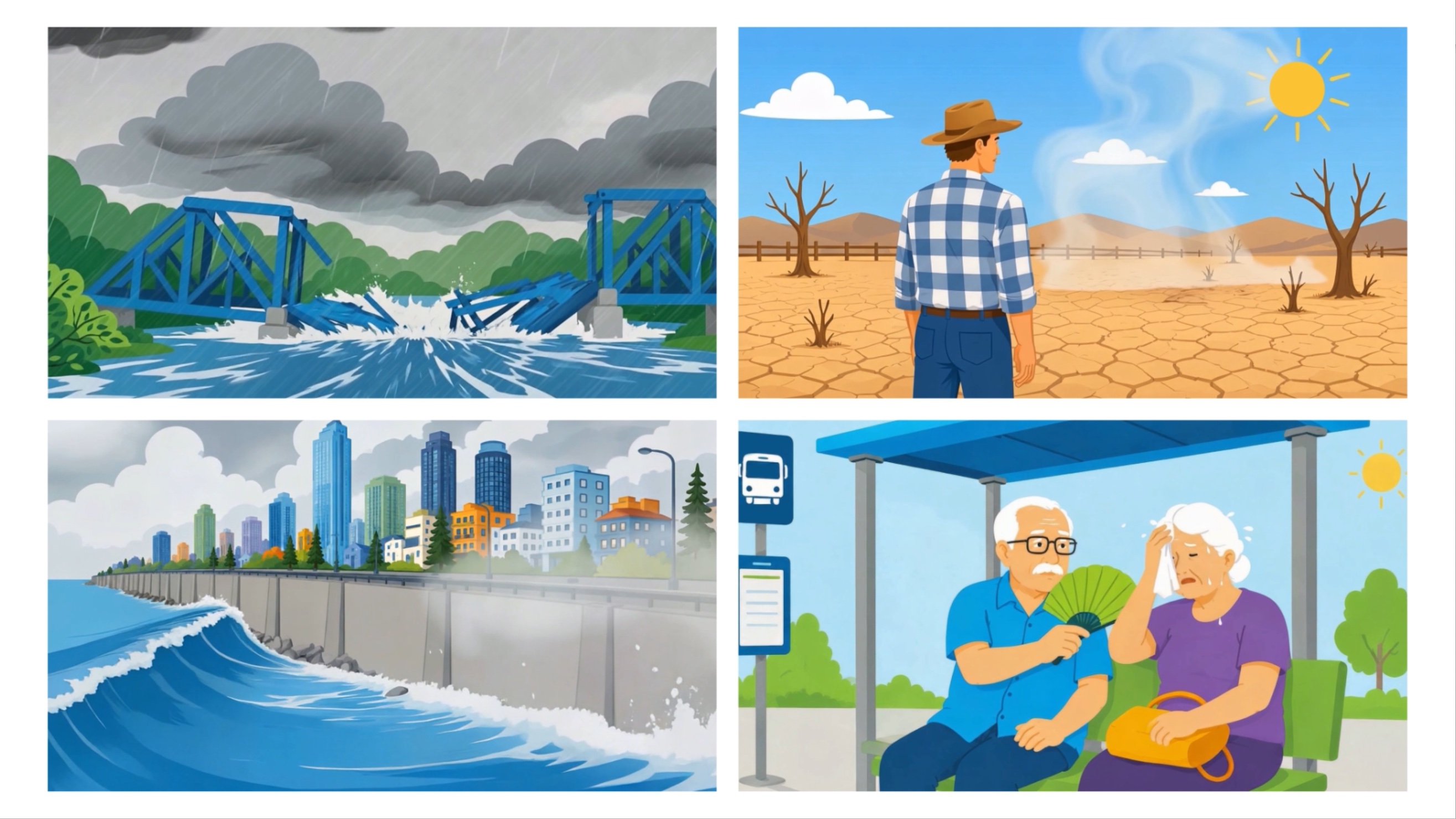
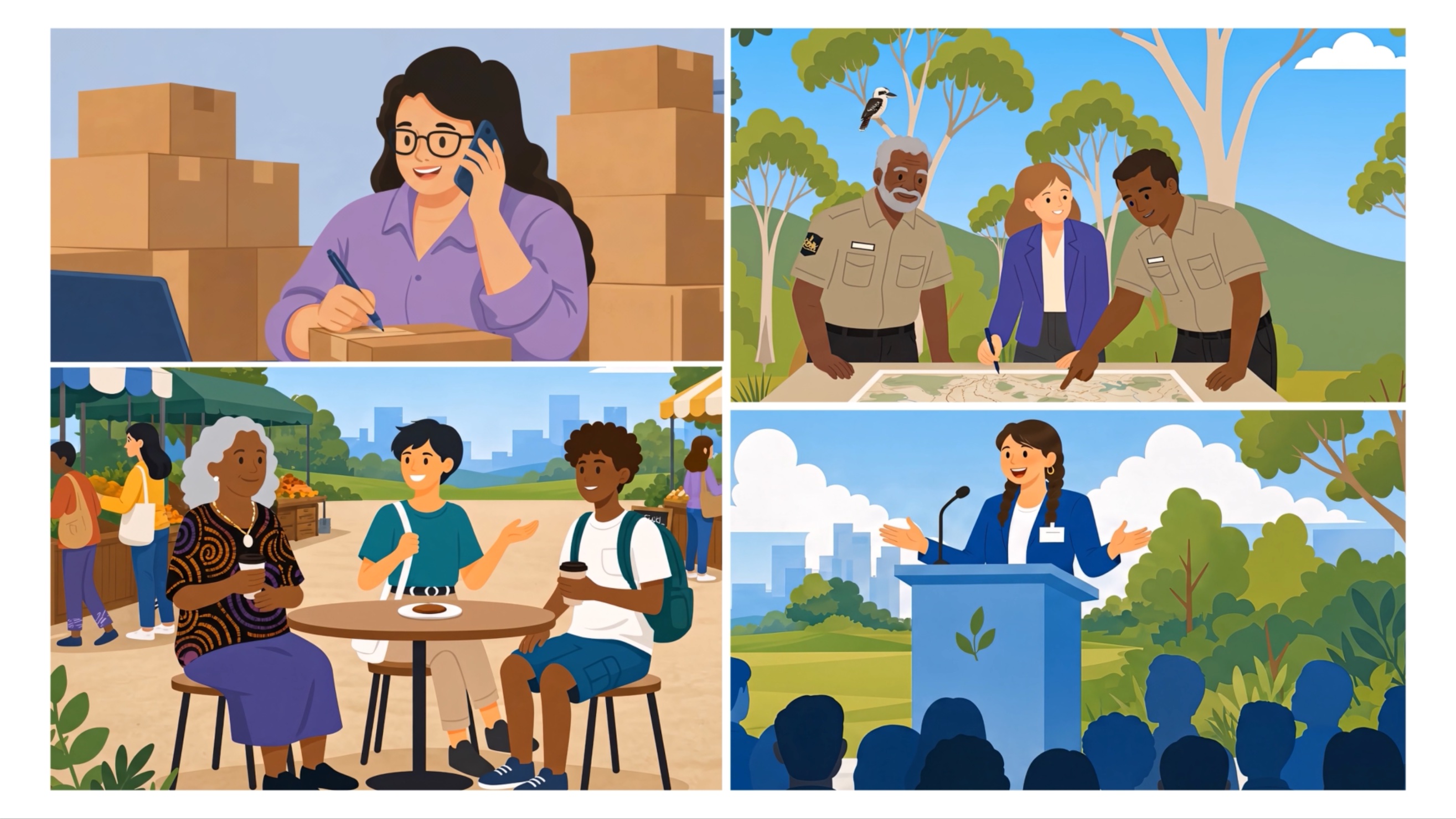
The narrative then brings those possibilities back to people. Government and business leaders, farmers, fishers, engineers and communities appear alongside examples of storms, drought, heat and rising seas. Abstract modelling capability becomes connected to the decisions and livelihoods it can inform.
Showing the role of ACCESS-NRI
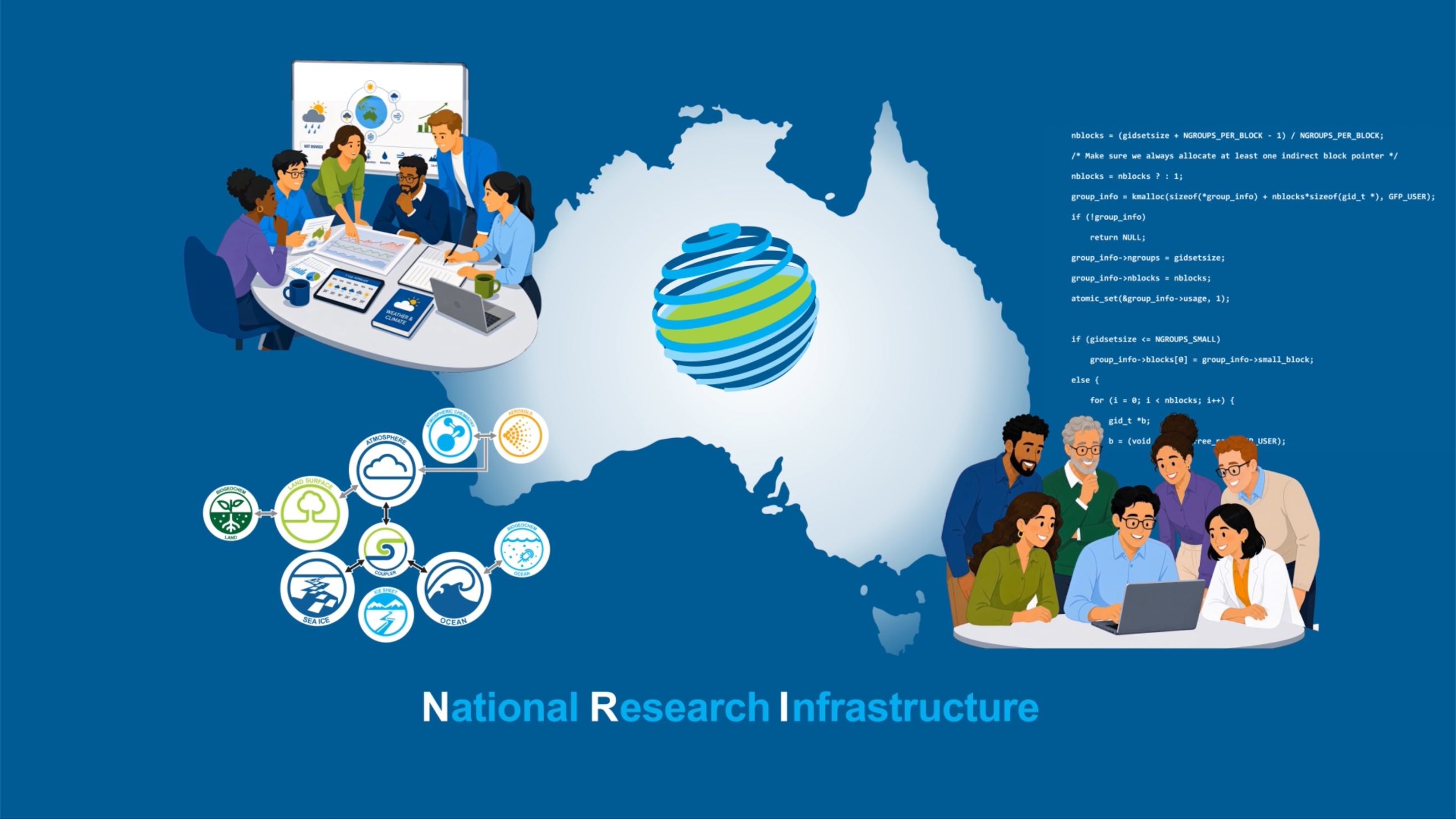
With the foundations established, the animation introduces ACCESS as a framework connecting models of the atmosphere, ocean, land and sea ice.
A visual diagram shows the components linked through a central coupler, followed by a transition back to the Earth as a connected system. This gives viewers a way to understand both the individual components and the value of bringing them together.
The story then introduces ACCESS-NRI through the people and activities behind the capability: scientists collaborating, research software being developed, and organisations contributing expertise.
This makes an essential part of the brief visible. Maintaining national climate modelling capability requires continuing work on software, scientific methods and collaboration, alongside access to computing infrastructure.
By this point, the case for sustained investment follows from what the audience has seen: useful climate information depends on the capability to produce it.
Bringing the story home
The closing sequence returns to the family in the car.
The rain clears, visibility improves and a navigation route appears. The visual resolves the uncertainty established at the beginning and connects it to the animation’s central message: better information helps us find a way forward.
Returning to the same people and setting gives the film a coherent ending. It also leaves viewers with a memorable image that connects national research capability to an everyday experience of making decisions.
The final scenes bring together researchers, business and government, reinforcing the shared value of understanding and preparing for a changing climate.
The solution
The resulting animation, What are climate models?, combines an accessible narrative with visual explanations of scientific and computational processes.
It brings together:
A familiar opening and closing story that establishes the relevance of climate information.
Visual explanations of equations, code, model grids and computing requirements.
A clear introduction to exploring different future scenarios.
Everyday examples connecting modelling to communities and decision-making.
A distinction between the ACCESS modelling framework and the national infrastructure supporting it.
A closing message connecting sustained capability with Australia’s future resilience.
The film gives ACCESS-NRI a shared starting point for conversations with people who need to understand the research, its applications and the infrastructure behind it.
Results & client response
ACCESS-NRI released the animation in August 2026, as National Science Week drew to a close, publishing it on its website to explain what climate models are, why they are needed and how ACCESS-NRI supports the research community.
The client also identified additional uses within its scientific community. Although researchers were not the primary audience, ACCESS-NRI told us it planned to show the film at its Workshop on Land and Coupled Modelling in Melbourne.
This feedback points to a useful role beyond the original stakeholder brief: giving specialists a concise resource they can use to introduce their work to others.
The client’s assessment of the collaboration was equally clear: “It was great to work with you, and we are very happy with the animation.” - ACCESS-NRI project team
Watch the animation...
Why it matters
Research infrastructure can be difficult to advocate for when its contribution is hidden inside software, specialist workflows and computing systems.
This project made those connections visible. It showed how scientific understanding becomes code, how code becomes simulations, and how those simulations help people investigate risks and prepare for the future.
For ACCESS-NRI, the animation provides a way to introduce that chain of value before a more detailed conversation begins. Funders can see the purpose behind the capability. Partners can explain the work in a consistent way. Researchers have a resource for sharing their field with people outside it.
The project demonstrates the value of a well-structured scientific story: giving audiences enough understanding to see why the detail matters—and a reason to keep learning.
Have complex research to communicate?
We help science, government and research organisations explain how their work connects to the people and decisions it serves.
Related case studies
Light pollution awareness
Read how we helped a government agency deliver a national awareness campaign with measurable behaviour change outcomes. [To be fleshed out]
MoneySmart
Read how we helped a government agency deliver a national awareness campaign with measurable behaviour change outcomes. [To be fleshed out]
Find out more
Discuss your next challenge.
FOLLOW US


ABOUT
SECTORS
SERVICES
WORK
TECHNOLOGY
Copyright 2026. Redboat Ventures. All Rights Reserved.
Terms of use | Privacy policy